As the date for the withdrawal of the UK (also known as Brexit) from the EU approached closer, it pays to hope for the best and prepare for the worst. With this in mind, the EMA have issued a guidance document on “Practical guidance for procedures related to Brexit for medicinal products for human and veterinary use within the framework of the centralised procedure, EMA, 19 June 2018” to prepare for the UK’s exit from the EU by the 30 March 2019.
For marketing authorisation applications (MAAs) that are expected to receive a Commission Decision (i.e. be approved) after 29 March 2019, the QPPV, PSMF (for medicines for human use), batch release sites, batch control sites, intended OMCL (if applicable) and nominated local representatives for Member States other than UK must be located in in the Union (EEA).
As published on the EMA website on the 10 July, a recent European Medicines Agency (EMA) survey shows that marketing authorisation holders for more than half (58%) of the 694 centrally authorised products (CAPs) with an important step in their regulatory processes in the United Kingdom (UK), are on track with their regulatory planning to ensure that their marketing authorisation remains valid once the UK leaves the European Union (EU).
This also means that 42% are NOT ready… Are you one of the 42%
The EMA urges those companies who have not yet informed EMA of their Brexit preparedness plans to do so as soon as possible to mitigate any risks to the continuous supply of medicines for human and veterinary use within the EU.
We can help…
Ivowen can help Clients prepare to implement the required changes by providing the following services:
Provide practical guidance on what needs to be in place by the above date to address situations where the UK is the current MAH, batch release site, batch control sites, location of QPPV& PSMF, transfer of orphan designation, etc.
Act as a MAH in the EU
Provide Pharmacovigilance (QPPV) services in the EU
Provide Pharmacovigilance System Master File and backup services located in the EU
Assist Clients in selecting and transferring RMS to another EU member state where the UK is current MAH
Preparation of Brexit related variations to be ready for above timelines
Assistance in changes needed to Product Information to reflect changes such as new MAH, batch release site(s), amend names of local representatives
Please contact us for further information at any time.
https://eureg.ie/wp-content/uploads/2018/07/Brexit.jpg351624ERAadministratorhttps://eureg.ie/wp-content/uploads/2023/10/European-Regulatory-Affairs-Logo.svgERAadministrator2018-07-31 15:09:352023-11-06 11:15:27Preparing for Brexit
The updated Annex to “Excipients in the labelling and package leaflet of medicinal products for human use” guideline was published on the 09/10/2017. This updated Annex in all EU languages can be found here:
Marketing Authorisation (MA) Holders for approved products and Marketing Authorisation Applications for new MAs are required to list certain excipients in the labelling information, as outlined in Directive 2001/83/EC, as amended. These include all excipients for parenteral, ocular and topical products, and specific excipients in other products. These specific excipients are listed in the Annex for ease of access.
What’s new?
The newly added or updated specific excipients listed in the Annex include:
Aspartame (E 951)
Benzalkonium chloride
Benzoic acid (E 210) and benzoates
Benzyl alcohol
Boric acid (and borates)
Cyclodextrins
Fragrances containing allergens
Fructose
Phenylalanine
Phosphate buffers
Propylene glycol (E 1520) and esters of propylene glycol
Sodium
Sodium laurilsulfate (E 487)
Sorbitol (E 420)
Wheat starch (containing gluten)
What do you need to do?
For any of your currently approved products, you should use the first regulatory opportunity to revise any wording in line with the annex. This could be any when you are submitting any variation that involves changing the product information, for instance.
We can help…
Ivowen can advise you on the requirements and assist you with any of the updates and variations that you might have.
Please contact us for further information at any time.
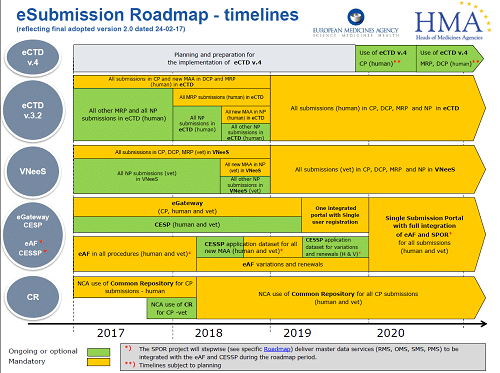
All good (and bad) things, must come to an end. The NeeS (Non-eCTD electronic submissions) submission format, will no longer be accepted for any Marketing Authorisation applications (MAAs) or submissions in MRP or DCP from 1st January 2018. Centralised Procedure (CP) submissions have been mandatory in eCTD since 2010. All new MAAs submitted using either the Decentralised Procedure (DCP) or the Mutual Recognition Procedure (MRP), have had to be in eCTD format since the middle of 2015. As of 1st January 2018, all MRP submissions must be submitted in eCTD. Therefore, if your application/product is not in eCTD format and you need to submit an MRP variation, you have to transition to eCTD for the next submission.
What is the timetable?
Starting from 1st January 2018 it is mandatory for all CP, DCP and MRP submissions to be in eCTD format. For national procedures (NP) the deadline is currently set at 1st July 2018 for new MAAs.
Following quickly behind these requirements, all submissions in CP, DCP, MRP and NP will have to be in eCTD from January 2019. At this stage, the exact date is not confirmed, but you need to be ready.
We can help…
Ivowen can create a baseline dossier for any submission based on currently approved information. Currently, baselines are not mandatory but some Member States are requesting them. In addition, it is best practise to get your dossier into a baseline for all future submissions.
Ivowen can transition your application to eCTD at the next regulatory activity (variation, renewal, Article 61.3, etc.).
Ivowen can manage the eCTD lifecycle for you in-house and provide you with fully valid, submission-ready sequences.
Contact us for more information or for help with building your eCTD now.
https://eureg.ie/wp-content/uploads/2018/02/2018-02-eSubmission-Roadmap-final-slide-v2.0-Feb-2017..png373500ERAadministratorhttps://eureg.ie/wp-content/uploads/2023/10/European-Regulatory-Affairs-Logo.svgERAadministrator2018-02-07 12:22:002023-11-06 11:12:36eCTD is coming…
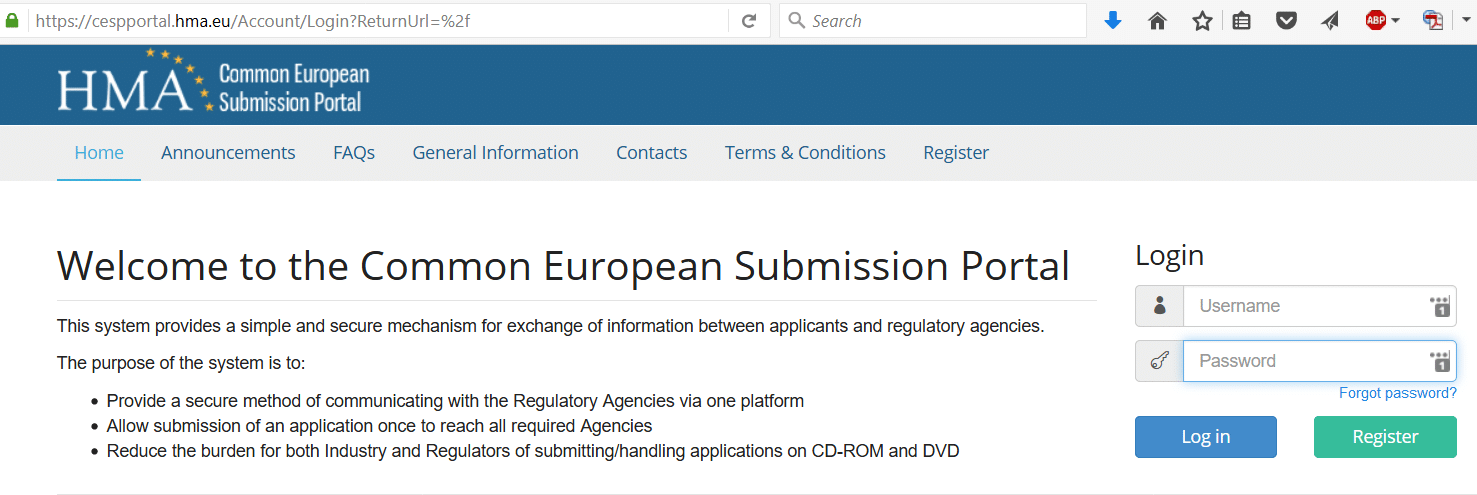
The submissions may concern national and European procedures (MRP, DCP) both for human and veterinary medicinal products.
Also from 3rd April 2017 the following submissions should be transmitted through CESP for Greece:
All submissions for Mutual Recognition/Decentralised Procedures (MRP/DCP)
national procedures relating to approvals, variations, renewals, PSURs, ASMFs etc., as well as any other documentation should be submitted using CESP.
Responses to deficiencies and any other additional information that can be requested from the EOF within the claims of assessment.
What does this mean for you?
To date in Poland, only submissions concerning initial MAAs were possible via CESP. There are still some national requirements in Poland, however. All documents that require an original signature can be either submitted
in electronic version with a valid electronic signature or
must be submitted in parallel to CESP in paper.
Documentation once submitted via CESP should be submitted via this channel throughout its whole lifecycle.
For submissions into Greece, additional CD/DVDs are no longer required. In addition, for each submission, a corresponding reference number will be automatically assigned and will be sent directly to the applicant.
Where can I find more information?
Full details are available on the Polish Ministry’s website (in Polish) here.
Ivowen are fully equipped to prepare and submit any applications on your behalf. Please contact us or our EuDRAcon partners for more information and for support of your dossier compilation or updates.
Written by Majella Ryan
https://eureg.ie/wp-content/uploads/2017/04/CESP-front-page.png4951477ERAadministratorhttps://eureg.ie/wp-content/uploads/2023/10/European-Regulatory-Affairs-Logo.svgERAadministrator2017-04-05 15:48:172023-11-06 11:08:23CESP expands in Poland and Greece
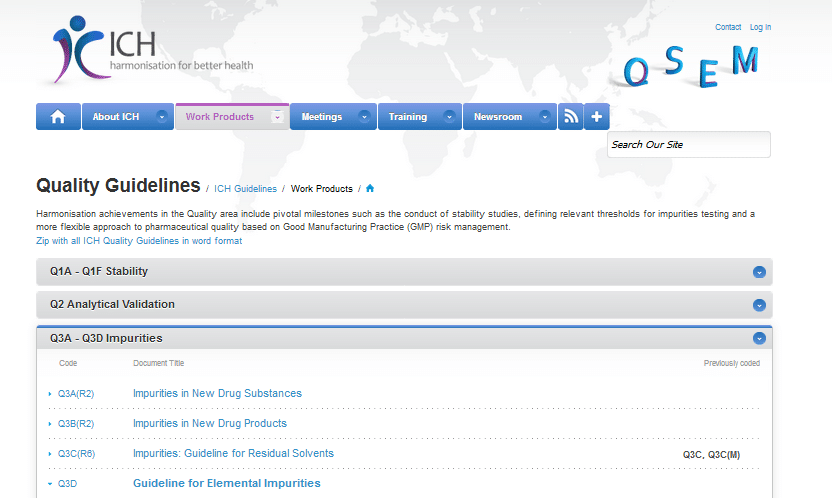
The ICH has introduced this new guideline to control the elemental impurities that may be present in drug products. It replaces EMEA guidance on Specification limits for residues of metal catalysts or metal reagents (EMEA/CHMP/SWP/4446/2000).
This guideline applies to new drug products (with a new drug substance) and to drug products containing existing drug substances. There are some exemptions, which you can find in the guideline.
It does not apply to drug products used during clinical research stages of development.
CHMP implementation dates for this guideline are
• New MA application for new products (new drug substance) – June 2016
• New MA application for products with existing drug substance – June 2016
• Marketed products including new MR applications of already approved products – Dec. 2017
What does this mean for you?
Elemental Impurities (EIs) in Drug Product (DP) may arise from several sources. They may be residual catalysts that were added intentionally or may be present as impurities (e.g., through interactions with processing equipment, container/closure systems or by being present in components of the drug product, i.e. drug substance, excipients or water).
Because EIs do not provide any therapeutic benefit to the patient, their levels in the drug product should be controlled within acceptable limits. These limits are outlined in the new guideline.
This guideline presents a process by which to assess and control EIs in the drug product using the principle of Risk Management as described in ICH Q9. This process provides a platform for developing a risk based control strategy to limit EIs in the DP.
The Risk Assessment (RA) should be based on scientific knowledge and principles. It should link to safety considerations for patients with an understanding of the product and its manufacturing process, and it should be focused on assessing the level of EIs in a DP in relation to the Permitted Daily Exposure (PDE) presented in the guidance.
The summary of RA and any measures taken, to ascertain compliance and the overall control strategy for EIs, including any specification as needed, should be provided in the Regulatory dossier.
The documentation of RA should be maintained in company’s quality system and should be kept for inspection (at the time of GMP inspection of the site by the competent authority).
If RA fails to demonstrate that an EI level is consistently less than the Control Threshold, then additional controls should be established to ensure that the EI levels does not exceed the PDE in the drug product. Approaches that an applicant can pursue include but are not limited to:
• Modification of the manufacturing steps that result in reduction of EIs,
• Implementation of in-process controls,
• Establishment of specification limits for excipients or drug substance or drug product,
• Selection of appropriate container closure systems.
For marketed products, if the RA concludes that additional controls are to be established then the regulatory impact of these additional controls should be evaluated to see whether it triggers a variation(s) to the existing MA.
Where can I find the relevant information…
The new guideline is available on the EMA website. You can find it by following this link.
We can help…
Ivowen are fully equipped to apply for any such variations on your behalf. Please contact us for more information and for support of your dossier compilation or updates.
Written by Nanda Naik
https://eureg.ie/wp-content/uploads/2017/03/ICH-elemental-imps.png498832ERAadministratorhttps://eureg.ie/wp-content/uploads/2023/10/European-Regulatory-Affairs-Logo.svgERAadministrator2017-03-16 12:08:342023-11-06 11:08:43New ICH guideline Q3D on elemental impurities (EMA/CHMP/ICH/353369/2013)
The Anatomical Therapeutic Chemical (ATC) Classification is an internationally accepted classification system for medicines. This system is maintained by the World Health Organisation (WHO). The WHO assigns ATC codes to all drug substances based on their therapeutic indication. The assigned ATC code must be present in your product information.
What does this mean for you?
Marketing authorisation holders of medicinal products, authorised under the national/mutual recognition/decentralised and centralised procedures should be aware that some ATC codes have recently been changed.
Consequently, if changes have been made to your ATC code/text you must apply for an update of the Summary of Product Characteristics (namely section 5.1 Pharmacodynamic properties) via a Type IA A.6 variation.
Where can I find the ATC codes?
The updated ATC code for human and veterinary medicines can be found in the following links:
Ivowen are fully equipped to apply for such variations on your behalf. Please contact us for more information and for support of your dossier compilation or updates.
Written by Fiona Downey
https://eureg.ie/wp-content/uploads/2023/10/European-Regulatory-Affairs-Logo.svg00ERAadministratorhttps://eureg.ie/wp-content/uploads/2023/10/European-Regulatory-Affairs-Logo.svgERAadministrator2017-02-04 18:09:552023-11-06 11:08:35New ATC codes for 2017
Falsified medicines are fake medicines that are designed to mimic real medicines. Due to the increase of falsified medicines on the market the EU has a strong legal framework for licensing, manufacturing and distribution of medicines. In July 2011 DIRECTIVE 2011/62/EU (http://eur-lex.europa.eu/LexUriServ/LexUriServ.do?uri=OJ:L:2011:174:0074:0087:EN:PDF ) came into force; this directive aims to prevent falsified medicines entering the legal supply chain and thus reaching patients. One of the Directive’s measures is the introduction of safety features on medicines.
Update on Safety Features on Medicines:
On February 9th 2016 the EC published an implementation plan for the introduction of the safety features on the packaging of nationally authorised medicinal products for human use:
In conjunction, a Regulation was also published laying down detailed rules for the safety features appearing on the packaging of medicinal products for human use:
The Delegated Regulation will apply in all European countries from the 9th February 2019 (3 years after its publication). Belgium, Greece and Italy have the option of deferring the application of the rules by an additional period of up to 6 years.
There are two safety features to be placed on the packaging of most prescription medicines and certain non-prescription medicines no later than 9 February 2019.
-1). a unique identifier (a 2-dimension barcode) and
-2). an anti-tampering device (ATD).
How does this affect your medicinal products and applications?
NewMAAs submitted from April 2016:
QRD:
Revised QRD template.
Revised dossier sections:
In the case of medicinal products where the ATD is placed on the immediate packaging because there is no outer packaging and the ATD affects the container and its closure system(s), applicants are required to include information on the ATD and how the ATD affects the container and its closure system(s) (sections 3.2.P.2.4 and/or 3.2.P.7 of the Notice to Applicants Volume 2B)
OngoingMAAs
QRD:
CHMP opinion in March 2016 advised to comply Revised QRD template
CHMP opinion from April 2016 onwards, applicants must comply with the revised QRD template
Revised dossier sections:
As per new MAAs
Existing MAs
QRD:
Revised QRD template within 3 years – Can be implemented in Type IA, Type IB, Type II, Renewals, Line extension etc. where the submission affects the product information (PI). Approval of submissions must be no later than the 9th February 2019. If no regulatory procedure occurs within the required timeframe a notification is requested to be submitted pursuant to article 61(3).
Revised dossier sections:
If the ATD is placed on the immediate packaging and the ATD affects the container and its closure system(s), applicants are required to submit the appropriate variations to include the information on the ATD and how the ATD affects the container and its closure system(s) (see section B.II.e of the Variation Guidelines).
Medicinal product no longer needs to bear safety features
QRD:
Regulatory procedure to remove the standard statements regarding the unique identifier and ATD.
Revised dossier sections:
ATD on immediate packaging: Regulatory procedure to remove the statements regarding the ATD in the dossier. ATD on outer packaging – no regulatory procedure necessary.
Change of Legal Status
QRD:
Non-prescription to prescription following a MAH switch application: MAH should use the regulatory procedure to comply with the revised QRD and regulations. Non-prescription to prescription following a Commission referral or a PSUR assessment, the Commission Decision will cover, inter alia, the regulatory requirements to implement the safety features.
Revised dossier sections:
Non-prescription to prescription: MAH should use the regulatory procedure to include the information on the ATD and how the ATD affects the container and its closure system(s)
What does the new QRD template now include?
The new QRD template includes the following sections in: Particulars to appear on <the outer packaging> <and> <the Immediate packaging:
UNIQUE IDENTIFIER – 2D BARCODE
UNIQUE IDENTIFIER – HUMAN READABLE DATA
Updated QRD template in track changes is available here:
Are any medicinal products not subject to prescription but that should include the safety features above?
Yes, the medicinal products not subject to prescription that shall bear the safety features, referred to in Article 45(2) are listed in Annex II of the Regulation located here:
If you have any queries on the above, if you would like any help with complying with the new regulation or if you have any other queries please contact us .
Written by Emily Fletcher.
https://eureg.ie/wp-content/uploads/2023/10/European-Regulatory-Affairs-Logo.svg00ERAadministratorhttps://eureg.ie/wp-content/uploads/2023/10/European-Regulatory-Affairs-Logo.svgERAadministrator2016-03-14 12:47:332023-11-06 11:08:27Falsified Medical Directive (FMD) and updated QRD template released February 2016