ERA at TOPRA 2025: Session 4 – Human – Revision of the EU variation Regulation

The EU variation Regulation was updated in March 2024 and the new Detailed guideline for classification of variations [last dated from 2008, last update 2013] was published this month.

Nevertheless, this is the first step, limited by the current legislation, and a second step is awaited after the new EU general pharmaceutical regulation is in force (expected 2028).

The current European Commission updates simplify the requirements and procedures, modernise the framework, adapt the rules for grouping and work-sharing, adapt the classification for some products, reduce administrative burden, and implement a risk-based approach.

This session presented an overview of the original goals of the revision, the new changes in the management of post-approval changes; including a comparison of the previous and proposed classifications with statistics and impact for both regulators and industries in term of volume of variations being generated.

The session discussed opportunities to continue re-inventing both submission policies and processes for post-approval changes in the EU for centrally and nationally registered products.

Points to note:

  • Second revision will come with implementation of new Directive ~ 2028 and will aim to reduce the number of Type IA variations 
  • Reinforcement of Annual Reporting and now mandatory worksharing (e.g. Update RMP, ASMFs, CEPs, etc.) discussed
  • Supergrouping can now include NAPs and Type IA variations
  • Worksharing (WS) now includes CAP, MR/DC and NAPs. New Declaration in eAF. Letter of Intent required.
  • MEB have seen significantly increased in WS applications. MEB is seeing a decline in IB variations already. Supergrouping applications have also increased in NL. 
  • EMA Q&As are being compiled and will be published in Q4 2025 (e.g. Stability testing, classification of changes, skip/periodic testing, PLCM, etc.). More Q&As planned for Q1 2026
  • SPOR (referential lists) and eAF/PLM updates to follow
  • EMA encourages the use of the Change Management Protocol and hope to see it used more in future
  • Mandatory worksharing should be useful for both industry and Regulators, to increase efficiency and get faster approvals for multiple MAs
  • EMA allows the grouping of related IA and IAin despite the fact that variation regulation does not technically allow this (and it is not allowed for MR/DC), new guidance should help to clarify
  • Article 5 recommendations will remain as an option for variations that are not included in the new regulation
  • ICH Q12 should be reviewed in conjunction with new regulation and guidance

Written by

Alice D’Alton

Alice Dalton 1

Alice Dalton 1

ERA at TOPRA 2025: Session 3 – Human – Applying Artificial Intelligence in Real-Life

Artificial Intelligence has already been a hot topic in numerous workshops, conferences, symposia and more in the past years. This session focused on questions such as:

How is it actually being applied in pharmaceutical development and regulation?

Where has it made the most impact in the field?

The session put aside the high-level discussions on what is possible with AI and discussed the real-life examples of where AI is already making a difference.

Points to note:

  • Auto dossier was presented and Demo shown of how it can automate CTD building
  • Collaborare: Unleashing the power of
    patient voices using AI.  This was presented and showed how patient voices can be added to decision making with AI tools
  • The Paul-Ehrlich Institut presented their ICSR processing tool and its benefits
  • The EMA presented its Signal detection tool and it benefits
  • Large Language models are routinely used today by industry and regulators to aid decision making and streamline their processes leaving more time for analysis and less time spent on admin, data collection and sorting
  • The AI workplan to 2028 is published – ‘Data and AI in medicines regulation
  • Fears of error introduced by AI was tempered by asking why we expect 100% accuracy from AI when humans do not output 100% accuracy all the time either
  • AI guidance from EMA will be principles based to future proof it as much as possible. Reflection papers will be followed by guidance in time

Written by

Alice D’Alton

Alice Dalton 1

Alice Dalton 1

ERA at TOPRA 2025: Session 1 – Human – General Pharmaceutical Legislation – Sandbox

This session explored key elements of the EU General Pharmaceutical Legislation (GPL) that aim to foster innovation and accelerate patient access to new treatments. Key focus included Platform Technology approaches and Regulatory Sandboxes.

By bringing together perspectives from patients, regulators, legislators, academia and industry, the discussion highlighted how these regulatory tools can support cutting-edge pharmaceutical development and manufacturing while keeping the EU region competitive and attractive for innovation.

This session provided a comprehensive regulatory and scientific perspective on how these approaches can drive the future of pharmaceutical development in Europe, ensuring faster access to innovation while maintaining regulatory scientific robustness.

A regulatory sandbox is a controlled framework that allows the testing of an innovative development in a controlled environment for a limited period of time.

The creation of a regulatory sandbox might be necessary when it is not possible to develop a medicinal product unless targeted adaptations or derogations to certain requirements are applied, under direct supervision of the relevant competent authorities.

The EC legal proposal is still under discussion with the Parliament and Council, and a final decision on inclusion of the Regulatory Sandbox in the EU pharmaceutical framework has not yet been reached.

However, as part of the Agency’s monitoring horizon scanning on future innovative products, informal ITF meetings with medicine developers may help to identify, at an early stage during development, potential case studies that could inform a regulatory sandbox approach in the future (if endorsed by the co-legislators). These meetings are:

  • Early informal dialogue between medicine developers and regulators to gather information
  • Not a pre-assessment of product eligibility for a future regulatory sandbox approach or any other procedure.

https://www.ema.europa.eu/en/human-regulatory-overview/research-development/innovation-task-force-briefing-meetings#how-to-apply-76207

Points to note:

  • Foreseen for MAA only at present
  • R&D with Industry, Regulators, Patients and Academia involved
  • Masterfile concept
  • Patent protections to be considered in advance

Written by

Alice D’Alton

Alice Dalton 1

Alice Dalton 1

Type IA Annual Reporting in the UK

Following on from our News Article: You need to apply Type IA Annual Reporting in the EU in 2025 we can further advise that the MHRA has also adopted the EU changes in relation to Type IA variations for UK products.


This means that the MHRA do also require the submission of Annual Updates for Type IA variations, and these should be submitted nationally, unless the Type IA variations are submitted as part of a group with other variations applied for via the International Recognition Procedure (IRP).


IRP Variations:

You can use IRP during the lifecycle of UK products that have been initially authorised or subsequently varied via standalone;

  • National route
  • Decentralised and mutual recognition reliance procedure (MRDCRP) route
  • European Commission (EC) Decision Reliance Procedure (ECDRP) route


Conversely, where a product has been authorised via IRP, it is acceptable to submit standalone national post-authorisation procedures, including variations.


Variations submitted via IRP should be classified according to MHRA guidance on variations to MAs. To facilitate lifecycle management of the MA, variations should be submitted as soon as possible after approval by the Reference Regulator (RR).


The MHRA will be publishing updated guidance on Annual Updates very shorty. So, watch this space for a more detailed overview when it becomes available.


Written by

Fiona Downey

Fiona Downey 1

Fiona Downey 1

You need to apply Type IA Annual Reporting in the EU in 2025

The Type IA Annual Update, also known as the “Annual report”, is a single submission of all the Type IA variations (not requiring immediate notification) which have been implemented during the previous twelve months.

The Annual report should be submitted as close to 12-month deadline as possible, but ultimately no earlier than 9 months and no later than 12 months after the first implementation date of the Type IAs included in the report.


Meaning of implementation for type-IA variations:

For quality changes, ‘implementation’ is when the company makes the change in its own quality system.

This implementation date must be carefully planned and recorded to facilitate submission of your Annual Reports.


How to plan the submission of your Annual Report:

As submission of the Annual report is dependent on the implementation of the first type IA variation, its submission date can change every year.

It is very important to note that the Type IA Annual report must fulfil the variation conditions for grouping (or super-grouping if it concerns more than one marketing authorisation).

It is expected that Type IA variations included in an Annual report will not be rejected. However, if rejected, Type IA variations from the annual report can be resubmitted as individual Type IAs immediately (outside of an annual report).


CMDh confirmed that although not specified in their guidance, Type IA variations implemented before 1 January 2025 can still be submitted as single type IA variations according to the current rules. The EMA confirmed that Type IA variations implemented in 2024 and not submitted to the Agency by 31 December may also be submitted by MAH no later than 12 months after implementation.


Therefore, Type IA variations implemented from 1 January 2025 should be submitted as part of the Annual report.

Type IAs can still be submitted outside the Annual report in the following cases:

  • If they are part of a grouped Type IB or Type II variation
  • If they are part of a super-grouping variation
  • If it involves the resubmission of a Type IA variation previously refused in the Annual report (12-month reporting period is criteria in this situation)
  • In exceptionally cases which should discussed and agreed with the EMA/NCAs.


eAF:

There are no current plans to amend the eAF to reflect Annual Reporting, instead, Applicants are advised to include a note in the cover letter and an additional note in the eAF scope to clarify that the application relates to the Annual Update of Type IA variations e.g. as foreseen in the updated Cover letter template:

<Annual update of type IA variation(s)

[X] We confirm that the annual update is submitted within 12 months following the implementation of the first type IA variation applied for in this notification. Implementation date of the first type IA variation:      >


If you need any assistance with planning and submission of your Annual Reports, contact us and we will be happy to help.


Written by

Fiona Downey

Fiona Downey 1

Fiona Downey 1

Back to Basics – The Decentralised Procedure (DCP)

We continue our back to basics series for those who may be new to Regulatory Affairs (If you need help with the jargon visit our A-Z Glossary of Regulatory abbreviations).

In the EU, there are two different procedures available to apply for a marketing authorisation application (MAA) for the same medicinal product in more than one Member State at a time:

This Article focuses the Decentralised Procedure (DCP).

The DCP is only applicable if no marketing authorisation has previously existed in the EU/EEA, as per Directive 2004/27/EC and if an identical dossier is submitted simultaneously in all selected Member States.

To prepare for a DCP submission:

  1. Establish a Reference Member State (RMS).
    • One Member State called the RMS will be selected by the Applicant to lead the assessment of the MAA.
    • To do this, complete a “Request for RMS in a Decentralised Procedure” Form and send it to your preferred RMS at least 2 months before the planned date of submission of the marketing authorisation application.
    • Only one RMS request can be submitted at a time. It is advisable to establish an RMS as soon as possible as DCP slots get booked up very quickly.
    • The guidance, Decentralised Procedure – Requests to act as RMS, provides an overview of the booking system & links to the various National Competent Authorities who act as RMS
  2. Prepare a dossier in accordance with the current legislation and EU guidelines.
  3. Check that the requirements for submissions for new Marketing Authorisations are met for the various Member States to avoid validation comments (at Day -14) and also for any additional requirements to determine if any wet/original/notarised signatures are required
  4. Ensure the correct fee amount has been paid.
  5. Check the dossier for common validation issues raised by the RMS and the CMSs in DCP procedures to prevent them being requested during the validation of your application.
  6. The applicant then simultaneously submits an identical dossier to the RMS and all CMS by the agreed submission date booked with RMS.
  7. The application will be submitted via CESP portal, according to eCTD Guidelines, & then applicant will send any hard copies/original documents required by various Member States as per national requirements.
  • Assessment Reports (Day 70, D120, Day160, D210):
    • The RMS is responsible for preparing an Assessment Report (AR) which summarises the dossier presented by the applicant. The AR characterises and critically evaluates the medicinal product concerned with regard to its quality, safety and efficacy.
    • This AR will be made available to all Concerned Member States (CMS) together with SmPC, PL and labelling by the RMS and forms the basis for the evaluation by CMS.
    • In the case a Member State concerned by the procedure is unable to accept the AR or draft AR on the basis of a “potential serious risk to public health”, the application will be sent to the CHMP for arbitration.
  • End of Procedure can be in 90-210 days after validation phase is closed.
  • It is advisable to plan the national translations in time. It is critical that the translation service used is reliable and technically competent to translate medical text.
  • Seven calendar days after end of procedure the Applicant should send high quality national translations of SmPC, PL and labelling and mock-ups to individual CMSs.
  • There is usually a 30-day National assessment before of the granting of the MA, however the timelines differ in each MS.
  • If consensus is not reached at the end of the procedure, a pre-arbitration (CMDH) and arbitration (CHMP) phase may take place.

We can help you to do all of the above or even better we can do it for you – to save you time and money let our experienced team take the pain out of it for you.

Written by

Marian Winder

Marian Winder 1

Applying for Marketing Authorisation via national route or DCP procedure in Ireland – HPRA slot booking

The HPRA is now moving towards a system of slot allocation (expected submission dates) for new national product registration applications, in addition to the existing DCP slot requirement.

Upon request, applicants will be given a submission slot in an agreed month.

This will help capacity planning for timely assessment of applications and will help maintain access for products on the Irish and European markets.

Slot-booking for national product authorisation applications

Applicants should contact RMS@hpra.ie no later than two months before their preferred submission date to request their preferred slot. The email subject title should include ‘National MA submission’.

The following documents should be provided when requesting a slot.

  • A CMDh common request form for reference Member States (RMS) which is available on the CMDh website.
  • A justification of the relevance of the application to the Irish market.
    • This should make reference to the unmet medical need your product will address and you may be asked if you intend to market the product in Ireland as part of your justification for applying to HPRA.

It is important that dossiers are complete before making a request, as delayed submissions may result in the loss of a slot.

If your preferred slot is not available, the next available slot will be allocated within a six-month window. Applicants will receive an email confirmation of a successful slot booking. While the HPRA are adapting to this new process we will try to facilitate applications which require an earlier start date.

Slot-booking for DCP authorisations

If you would like the HPRA to function as an RMS, please contact RMS@hpra.ie at least three months before your preferred submission date to request your preferred slot. The email subject title should include ‘DCP submission’.

When requesting a DCP slot applicants should also provide the completed CMDh common request form for an RMS.

Again, It is important that dossiers are complete before making a request, as delayed submissions may result in the loss of a slot.

If your preferred slot is not available, the next available slot will be allocated, within a two-year window. Applicants will receive an email confirmation of a successful slot booking. The HPRA also operates a cancellation list for slots which become available at short notice.

Scientific advice

Due to the complexities of Article 10a applications, applicants should obtain national scientific advice before submitting requests for such new applications. Further information can be found on our national scientific and regulatory advice page.

Ireland as a CMS

Furthermore, IE routinely participates as a Concerned Member State (CMS) in standard DCP procedures. A zero-day procedure as a CMS may be possible for medicines where Ireland is experiencing a critical shortage of a particular medicine.

Need support

Feel free to contact us here at ERA to assist you with all things regulatory in Ireland, UK and across the EU.

We take the pain out of regulatory so that you can take your medicine to the next level.

Written by

Alice D’Alton

Alice Dalton 1

Alice Dalton 1


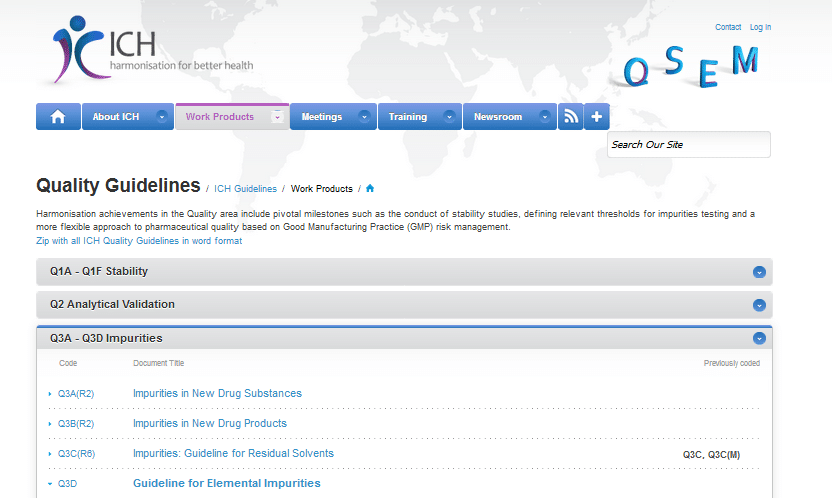
Revised ICH guideline Q3D on elemental impurities (EMA/CHMP/ICH/353369/2013)

A revised ICH Q3D guideline (R2) on ‘Elemental Impurities’ (EMA/CHMP/ICH/353369/2013) will come into effect on 24 September 2022.

The guideline is revised:

  • To amend permitted daily exposure (PDE)
  • To amend monographs
  • To add a section on limits for elemental impurities for cutaneous and transcutaneous formulations.

The revised guideline is available on the EMA website. You can find it by following this link

If Risk Assessment (RA) fails to demonstrate that an Elemental Impurities (EI) level is consistently less than the Control Threshold, then additional controls should be established to ensure that the EI levels does not exceed the PDE in the drug product.

Approaches that an applicant can pursue include but are not limited to:

  • Modification of the manufacturing steps that result in reduction of EIs,
  • Implementation of in-process controls,
  • Establishment of specification limits for excipients or drug substance or drug product,
  • Selection of appropriate container closure systems.

For marketed products, if the RA concludes that additional controls are to be established then the regulatory impact of these additional controls should be evaluated to see whether it triggers a variation(s) to the existing MA.

Ivowen is fully equipped to apply for any such variations on your behalf. Please contact us for more information and for support of your dossier compilation or updates.

Written by Nanda Naik

Nanda Naik

Nitrosamines Risk Assessment – Steps 2 and 3

MAHs are reminded that all activities related to Step 2 – Confirmatory Testing and related investigations in case of confirmed presence of nitrosamines should be performed sufficiently in advance to ensure that the necessary variation(s) can be submitted by the Step 3 deadlines, i.e. by  26 September 2022 for chemical medicines or 1 July 2023 for biological medicines.

Steps & Deadlines Chemical medicines Biological medicines
Step 2 – Confirmatory Testing 26 September 2022 01 July 2023
Step 3 – Update marketing authorisations 26 September 2022 01 July 2023

The implementation of the risk controls and mitigation studies may result in changes to the current manufacturing process, controls and specification, product formulation, raw materials and/or packaging, etc.

The necessary variation(s) to the marketing authorisation for the purposes of implementing these risk controls should contain information on amendments to the 3.2.S and/or 3.2.P dossier sections.

These variation(s) should be submitted according to the existing variations classification guideline through the usual channels by the above deadlines.

The variation(s) should be clearly identified in the reason comment that the change is the outcome of the step 2 risk assessment and confirmatory testing.

Worksharing is highly recommended in all cases where the same variation applies to several national or MRP/DCP products.

If you need any clarification or support to help implement the responsibilities of a MAH with regard to Nitrosamines contact us  and Ivowen will gladly assist you in a timely manner.

Written by Fiona Downey

fiona downey

The new veterinary regulation (Regulation 2019/6) and its implications on regulatory submissions for veterinary medicinal products

The new veterinary regulation (NVR), Regulation 2019/6 applied to all EU Member States from 28 January 2022. The new legislation represents a significant change in how veterinary medicinal products are authorised, monitored and controlled in the EU.

The Regulation was developed in order to implement a fit-for-purpose veterinary legislation which would no longer be based on the equivalent human medicines authorisation system.

The legislation repeals Directive 2001/82/EC.

The changes are intended to:

  • reduce the administrative burden on companies and regulatory authorities
  • enhance the availability of veterinary medicinal products
  • stimulate innovation of new and existing medicines
  • strengthen the EU response to fight antimicrobial resistance.

The new Regulation 2019/6 is broken down into the following chapters:

I. Subject matter, scope and definitions

II. Marketing authorisations

III. Procedures for marketing authorisations

IV. Post marketing authorisation measures

V. Homeopathic veterinary medicinal products

VI. Manufacturing, import and export

VII. Supply and use

VIII. Inspections and controls

IX. Restriction sand penalties

X. Regulatory network

XII. Common and procedural provisions

XII. Transitional and final provisions

Here is a summary of some of the noteworthy regulatory changes that have been introduced in chapters II, III & IV of the new veterinary regulation:

Chapter II – Marketing Authorisations:

An MA for a veterinary medicinal product shall be valid for an unlimited period of time. Hence, there is no longer a requirement for a renewal procedure or the sunset clause.

Chapter III – Procedures for marketing authorisations

  • Decentralised Procedure:
    • Scope and timelines remain unchanged
    • Responsibilities of RMS, CMS and applicant have changed at some steps of the procedure. For example,
      – CMSs will also provide comments directly to the applicant at Day 100 and Day 145 instead of to the RMS only (therefore, comments are no longer anonymised).
      – at Day 100-105 and Day 145-150, the applicant will now compile and circulate the LoQs.
      – at Day 210, RMS will now be required to circulate a Final Assessment Report (FAR).
    • Possibility now for re-examination request by applicant according to Article 50 of the NVR. For further information on this change, note that CMDv have published a Best Practice Guide for Re-examination of RMS assessment report procedure.
  • Mutal Recognition Procedure:
    • Scope remains the same. However, a minimum of six months is required between the decision granting the national MA and submission of an application for a MRP.
    • 90 day procedure length remains unchanged but there are changes to some of the time-points in the procedure.
    • Responsibilities of RMS, CMS and applicant have changed at some steps of the procedure, similar to those outlined above for the DCP.
  • Centralised Procedure:
    • Scope of the mandatory use of the procedure has been widened. Refer to Article 42 (point no. 4) for details.
  • National Procedure:
    • No significant changes.
  • Subsequent Recognition Procedure (SRP):
    • Previously known as the “Repeat Use Procedure” is now officially recognised under Article 53 of the NVR.
    • Timelines and other requirements have been changed.

Due to the changes caused by the new regulation, CMDv have published updated guidance for DCP, MRP and SRP procedures:

https://www.hma.eu/veterinary-medicines/cmdv/procedural-guidance/applications-for-marketing-authorisation/authorisation-procedures.html

Chapter IV: Post marketing authorisation measures (Variations)

In terms of variations to marketing authorisations, one of the main changes arising from Regulation EU 2019/6 is that instead of the previous categories of Type IA, IB and II variations there will now only be two categories of variations:

  • Variations Not Requiring Assessment = VNRA
  • Variations Requiring Assessment = VRA

Vet article image 05 04 22


VNRAs consist of all the previous type IA and some Type IB variation categories.

VRAs will consist of most of the previous Type IB and all of the Type II variation categories.

Commission Regulation 1234/2008 will now no longer apply to veterinary medicinal products due to the introduction of new veterinary regulation (2019/6).

 Variations Not Requiring Assessment (VNRA)

The Implementing Regulation (EU) 2021/17*, includes a list of all variations not requiring assessment along with any associated conditions and documentation requirements and is published in the EU Official Journal here.

The variations are classified as follows:

  1. Administrative changes
  2. Changes to the quality part of the dossier
  3. Changes to the safety, efficacy and pharmacovigilance part of the dossier
  4. Changes to the vaccine antigen master file (VAMF) part of the dossier

VNRAs will be processed as follows:

  • The MAH will:

– Record the change in the Product Union Database (UPD) within 30 days of implementation including required documents (no application form is necessary).
– Documents submitted directly to UPD. No CESP submission. Documents include those listed in the Implementing Act as well as SPC, package leaflet, labels.

  • The relevant CA/RMS will

– Approve/reject the variation
– Inform MAH & CMS by recording decision in database and by e-mail

CMDv has written a Best Practice Guide for variations not requiring assessment in order to provide detailed guidance on the new process.

The EMA website includes a video tutorial showing how to submit a VNRA via the Union Product Database here.

Variations Requiring Assessment (VRA)

Every change not listed in the Implementing act mentioned above (2021/17)* will require a variation that needs to be assessed.

CMDv and EMA have written a new classification guideline for the VRAs:
Guidance on the details of the classification of variations requiring assessment according to Article 62 of Regulation (EMA/CMDv/7381/2021).

The format and categorisation is similar to the previous regulation which applied (Commission Regulation 1234/2008 ), however there are many differences.

The variations are divided into chapters as follows:

E. Administrative changes
F. Quality changes
G. Safety, Efficacy and Pharmacovigilance changes
H. VAMF or, PTMF changes
I. Changes of active substance(s), strength, pharmaceutical form, route of administration or food producing target species

Z-categories have also been included to address unlisted variations and VNRA, if requirements laid down in the Implementing Regulation are not met.

The timetable for VRAs is also outlined in the new guidance as follows:

  • a standard timetable, denoted by ‘S’ which will be 60 days
  • a reduced timetable, denoted by ‘R’ which will be 30 days
  • an extended timetable, denoted by ‘E’ which will be 90 days

For details on how to submit a VRA, CMDv have written a Best Practice Guide for Variations Requiring Assessment (EMA/CMDv/144277/2021). It has been prepared in order to facilitate the processing of VRAs for MRP/DCP products. The same general principles will apply to purely nationally authorised products.

Recommendation for the classification of variations not already listed

A procedure for requesting a recommendation for the classification of variations not already listed in either the above-mentioned Implementing Regulation or the EMA/CMDv Guidance on variations requiring assessment has also been established. This is similar to the previous CMDv recommendations for classification of unforeseen variations, according to Article 5 of Regulation 1234/2008.

Refer to CMDv new guideline for detailed advice this new process entitled: Procedural advice for requests for the classification of variations not already listed in Commission Implementing Regulation (EU) 2021/17 or EMA/CMDv Guidance on the details of the classification of variations requiring assessment according to Article 62 of Regulation 2019/6 (EMA/CMDv/144284/2021).

Worksharing and Grouping

Grouping and worksharing procedures do not apply to VNRA, they only apply to VRA.
As a consequence, no VNRAs can be included in a grouping or worksharing even if they are consequential or related to the VRAs included in the grouping or worksharing procedure.
However, the introduction section of CMDv Best Practice Guide for Variations Requiring Assessment (which also covers grouping), outlines the different approaches to follow when there is a need to co-ordinate changes that are related or consequential but are classified as VNRA and VRA.

The worksharing procedure is outlined in Article 65 of the NVR and it will be compulsory to follow this procedure, when the same change is being applied in different member states. Information related to worksharing is also mentioned in the CMDv BPG for Variations Requiring Assessment. However a specific guide on worksharing has also been written by CMDv: Best Practice Guide for Worksharing (EMA/CMDv/204024/2021).

Union Product Database

Due to the new regulation, the EMA has introduced new IT systems. The main one will be the Union Product Database (UPD).

It will contain information for all authorised veterinary medicines in the EU (including all nationally authorised products). For MAHs, it will provide self-service access for specific regulatory activities, including the management of variations that do not require assessment.

For more information on implementation, training, registration and access of the UPD, refer to the following link here on the EMA website.

The UPD will be linked to the other 3 other databases in the future. These databases are at different stages of development and introduction:

  • Union Pharmacovigilance Database

On 28 January 2022, the Union Pharmacovigilance Database (EVV) was successfully released. User guidance and the release notes are available here.

  • Manufacturing and Wholesale Distribution Database

The Manufacturers and Wholesale Distributors database (MWD) was released on 28 January 2022. The system is an enhanced and upgraded version of EudraGMDP, the EU database of manufacturing authorisations and certificates of good manufacturing practice, with changes affecting both the veterinary and the human domains. The MWD Project Group has also adopted requirements for aligning the GDP module with the change made to the system so far. Changes to the module will be delivered in a subsequent release scheduled for Q1 2022. In addition, enhanced search facilities on the GMP module will be delivered in the same release.

  • Database for the Collection of Data on Sales and Use of Antimicrobials in Animals.

IT development on the Collection of Antimicrobials Sales and Use Data (ASU) project started in January 2022. Information on the progress of this project will be published on the EMA website as this project develops.

Q&A on transitional arrangements

CMDv has prepared a Q&A document in order to assist both MAHs and NCAs in the management of the transition between the requirements of Directive 2001/82/EC and Regulation (EU) 2019/6. This Q&A document will be regularly updated and can be found under the following link.

This document includes an Annex which outlines how individual Member States will handle renewals of marketing authorisations after 28 January 2022.

Should you need any support with Veterinary Procedures feel free to contact us & the Ivowen team will be here to help.

Written by Claire Brown

Claire Brown

Request a Quote